
Graduate School | Rama 9 Bangkok Campus
Mastering Digital Futures at Stamford International University
Explore the M.Sc. and Ph.D. programs in Digital and Information Technology (International Program), designed for advanced practice, research leadership, and real industry impact.
At-a-Glance Overview
Key details extracted from the official 2024 M.Sc. and 2025 Ph.D. curriculum specifications.
Activities
Latest program activities, workshops, seminars, and announcements.
If the feed does not load in your browser, open directly: STIU Program Activities on Facebook
Program Explorer
Both programs are shown below with updated 2025 factsheet information.
Master of Science in Digital and Information Technology
International Program | New Curriculum A.D. 2024 / B.E. 2567 | Curriculum Code: T20242084108463
Degree: M.Sc. (Digital and Information Technology)
Factsheet Highlights
- Intakes: Term 1 (July-October), Term 2 (December-March), Summer (May-June)
- Total credits: 36 credits for both Plan A and Plan B
- Program formats: Thesis route or Independent Study route
- Key requirement: English proficiency per STIU requirement or placement test
Program Objectives
- Integrate and create innovation in digital and information technology.
- Build inquiry, critical thinking, leadership, teamwork, and multitasking ability.
- Strengthen ethics, honesty, social responsibility, and environmental awareness.
- Develop logical reasoning, digital literacy, communication, and social literacy.
Plan 1 (Academic)
- Total at least 36 credits
- Coursework: 24 credits
- Thesis: 12 credits (
MSDIT721) - Admission baseline: bachelor's degree, IT foundation, GPA >= 2.75, committee approval
Plan 2 (Professional)
- Total at least 36 credits
- Coursework: 30 credits
- Independent Study: 6 credits (
MSDIT720) - Admission baseline: bachelor's degree, IT foundation, GPA >= 2.00, committee approval
Foundation & Compulsory Courses
MSDIT601 Fundamentals of Programming (Non-credit)
MSDIT602 Principles of Digital and Information Technology
MSDIT603 Modern Database Management and Data Science Fundamentals
MSDIT604 Modern Systems Analysis and Design
MSDIT605 Machine Learning and Artificial Intelligence
MSDIT606 Cyber Security and Data Protection
MSDIT607 Blockchain Technology and Decentralized Applications
MSDIT608 Research Methodology in Digital and Information Technology
Elective Highlights
MSDIT610 Fundamental of Generative AI and Its Applications
MSDIT611 Digital Marketing
MSDIT612 Data Visualization and Storytelling
MSDIT613 Software Engineering and Project Management
MSDIT614 Digital Transformation and Innovation
MSDIT615 Internet of Things (IoT) and Smart Systems
MSDIT616 Cloud Computing, Virtualization, and DevOps
MSDIT617 Big Data Analytics and Technologies
MSDIT618 NLP with Large Language Models
MSDIT619 Building Generative AI-Powered Applications
MSDIT620 Digital Twins Technology and Applications
MSDIT621 Special Topics in DIT
Research Components
MSDIT720 Independent Study 6(0-18-0)
MSDIT721 Thesis 12(0-36-0)
Career Opportunities
- Digital and IT Innovator
- Software Developer / Systems Architect
- Academic Lecturer / Researcher in DIT
- Digital Technology Management Professional
- Digital Tech Entrepreneur
Doctor of Philosophy in Digital and Information Technology
International Program | New Curriculum A.D. 2025 / B.E. 2568
Degree: Ph.D. (Digital and Information Technology) | Total: 48 credits
Factsheet Highlights
- Intakes: July, November, March
- Total credits: 48 credits for Study Plan 1.1 and Study Plan 2.1
- Program formats: Research-focused or Coursework + Dissertation path
- Key requirements: Master's degree GPA at least 3.0/4.0, English proficiency, academic interview
Program Philosophy
- Cultivate integrity-driven researchers for original DIT contributions.
- Advance rigorous inquiry, innovation, and industry linkage.
- Address complex international digital challenges with research impact.
- Develop leaders for academia, industry, and society in a technology-driven world.
Plan 1.1 (Dissertation)
- Foundation: 2 non-credit courses (
PDIT701,PDIT702) - Dissertation: 48 credits (
PDIT791) - For master's graduates with thesis/research capability
- English proficiency and committee approval required
Plan 2.1 (Coursework + Dissertation)
- Foundation: 2 non-credit courses
- Core: 9 credits + Elective: 3 credits
- Dissertation: 36 credits (
PDIT792) - Related master's degree, English proficiency, committee approval
PLOs for Doctoral Graduates
PLO1 Synthesize advanced DIT theories to identify major research gaps and original questions.
PLO2 Generate research and solutions with international and industry relevance.
PLO3 Design rigorous independent research with professional integrity.
PLO4 Apply advanced interdisciplinary research skills for societal and industry challenges.
PLO5 Uphold highest research ethics and responsible innovation.
PLO6 Demonstrate intellectual leadership and communicate to diverse global audiences.
Foundation Courses (Non-credit)
PDIT701 Scholarly Research Communication and Ethics
PDIT702 Theoretical Foundations of Information Systems Research
Core Courses (9 Credits)
PDIT711 Research Methodologies in Digital and Information Technology (3 credits)
PDIT712 Information Security Management (3 credits)
PDIT713 Generative AI in Work, Academia, and Research (3 credits)
Elective Course Pool (Choose 1 Course, 3 Credits)
PDIT731 Blockchain, Smart Contracts, and Distributed Applications (3 credits)
PDIT732 Large Language Models Essential (3 credits)
PDIT733 Advanced Topics in Generative AI Implementation (3 credits)
PDIT734 Special Topics in Digital and Information Technology (3 credits)
PDIT735 Digital Transformation and Innovation (3 credits)
PDIT736 Requirements Engineering for Digital and Information Technology Innovation (3 credits)
PDIT737 Digital Storytelling and Narrative Design for DIT Research Dissemination (3 credits)
PDIT738 Human Computer Interaction Research and Design for DIT Innovation (3 credits)
PDIT739 Seminar in Emerging Trends in Digital and Information Technology (3 credits)
Dissertation Structure and Qualifying Examination
Plan 1.1: PDIT791 Doctoral Dissertation (48 credits), typically distributed across five dissertation registrations (12 + 9 + 9 + 9 + 9 credits).
Plan 2.1: PDIT792 Dissertation (36 credits), typically distributed across four dissertation registrations (9 + 9 + 9 + 9 credits).
Qualifying Examination (QE): Required milestone before full dissertation progression.
Admission Criteria Snapshot
Master's degree in DIT/CS/IS/Software Engineering/Computer Engineering/Data Science/Multimedia Technology or related field from accredited institution.
Plan 1.1 requires a completed master's thesis with demonstrated research capability.
Applicants must meet Stamford International University's English proficiency requirements.
Final selection is subject to Program Committee and Doctoral Programs Central Administration Committee.
Career Opportunities
- University Professor in DIT
- Research Scientist in DIT
- AI Engineer
- Information Technology Manager
- Digital Transformation Consultant
- Chief Technology Officer (CTO)
Publications
- Develop publishable research from dissertation work under advisor guidance.
- Prepare manuscripts for international journals and peer-reviewed conferences.
- Present research findings in seminars, colloquia, and academic forums.
- Build a publication portfolio aligned with dissertation milestones and graduation readiness.
Activities
- Research proposal development and qualifying examination preparation.
- Regular dissertation progress reviews with advisors and committees.
- Participation in doctoral seminars, workshops, and research discussions.
- Academic networking through conference participation and collaborative projects.
Planned Learning Schedule
Clear term-by-term learning sequence adapted to the 2025 curriculum structures.
M.Sc. Plan A (Thesis)
Total 36 credits | 8 taught subjects + thesis | Recommended load: 3-4 subjects per semester
| Study Period | Credit Load | Learning Focus |
|---|---|---|
| Year 1, Term 1 | 9-12 | Foundation preparation and 3-4 taught subjects |
| Year 1, Term 2 | 9-12 | 3-4 taught subjects |
| Year 1, Mid-Year Session | 3-6 | Optional 1-2 subjects based on availability |
| Year 2, Term 1 | Remaining credits | Complete taught courses and thesis development under advisor supervision |
M.Sc. Plan B (IS)
Total 36 credits | 10 taught subjects + independent study | Recommended load: 3-4 subjects per semester
| Study Period | Credit Load | Learning Focus |
|---|---|---|
| Year 1, Term 1 | 9-12 | Foundation preparation and 3-4 taught subjects |
| Year 1, Term 2 | 9-12 | 3-4 taught subjects |
| Year 1, Mid-Year Session | 3-6 | Optional 1-2 subjects based on availability |
| Year 2, Term 1 | Remaining credits | Complete taught courses and independent study project |
Ph.D. Study Plan 1.1 (By Research)
Total 48 credits | Foundation study, qualifying examination, and dissertation
| Study Period | Credit Load | Learning Focus |
|---|---|---|
| Year 1, Term 1 | 0 | Foundation courses and qualifying examination preparation |
| Year 1, Term 2 | 12 | Dissertation proposal and early dissertation work |
| Year 1, Mid-Year Session | 0 | Research continuation milestone |
| Year 2, Term 1 | 9 | Doctoral dissertation research and supervision |
| Year 2, Term 2 | 9 | Doctoral dissertation research and supervision |
| Year 2, Mid-Year Session | 0 | Research continuation milestone |
| Year 3, Term 1 | 9 | Doctoral dissertation writing and validation |
| Year 3, Term 2 | 9 | Final dissertation completion and publication preparation |
| Year 3, Mid-Year Session | 0 | Final defense and graduation completion phase |
Ph.D. Study Plan 2.1 (By Coursework)
Total 48 credits | Coursework, qualifying examination, and dissertation
| Study Period | Credit Load | Learning Focus |
|---|---|---|
| Year 1, Term 1 | 3 | Foundation courses and one doctoral coursework subject |
| Year 1, Term 2 | 9 | Advanced coursework and qualifying examination |
| Year 1, Mid-Year Session | 0 | Progression review and dissertation direction |
| Year 2, Term 1 | 9 | Doctoral dissertation research and supervision |
| Year 2, Term 2 | 9 | Doctoral dissertation research and supervision |
| Year 2, Mid-Year Session | 0 | Research progression milestone |
| Year 3, Term 1 | 9 | Doctoral dissertation writing and validation |
| Year 3, Term 2 | 9 | Final dissertation completion and publication preparation |
| Year 3, Mid-Year Session | 0 | Final defense and graduation completion phase |
Notes: For the M.Sc. program, the recommended registration is 3-4 subjects per semester, with final subject offering depending on student demand, lecturer availability, and university regulations. Ph.D. study plans are flexible and may be adjusted based on student readiness, research progress, and advisor recommendation.
Publications
Program-wide publication directions for graduate students and research supervisors.
M.Sc. Publication Path
- Convert thesis or independent study outcomes into conference-ready papers.
- Focus on applied innovation in AI, analytics, cybersecurity, and digital transformation.
- Develop academic writing, citation quality, and research ethics before submission.
Ph.D. Publication Path
- Produce publishable manuscripts from dissertation milestones each academic year.
- Target peer-reviewed journals and international conferences in Digital and IT.
- Strengthen research impact through original contribution and reproducible methods.
Publication Support
- Advisor-led manuscript reviews, colloquium feedback, and research discussion groups.
- Structured preparation for abstract writing, paper presentation, and revision cycles.
- Cross-program collaboration opportunities between M.Sc. and Ph.D. research topics.
About Lecturers
Lecturers responsible for the DIT curricula in the M.Sc. and Ph.D. programs.

Assoc. Prof. Dr. Charnsak Srisawatsakul
Ph.D. Information Technology, M.Sc. Electronic Business, B.Sc. Computer Science.
Supports curriculum design, research supervision, and innovation-focused graduate development.
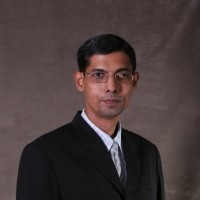
Dr. Maruf Hasan
D.Eng. Information Science, M.Sc. Information Systems and Computer Science, B.Sc. Computer Engineering.
Contributes to advanced research methodology, systems, and industry-relevant technology integration.
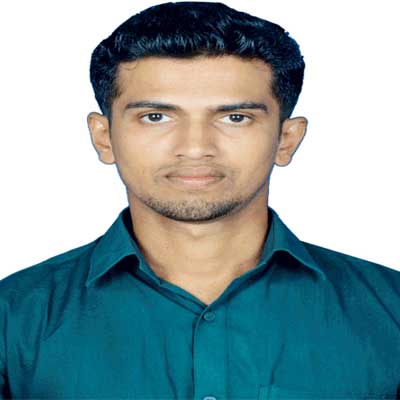
Asst. Prof. Dr. Abdul Jabbar Perumbalath
Ph.D. Computer Science, M.Phil. Computer Science, M.Sc. Computer Science, B.Sc. Computer Science.
Supports doctoral-level scholarship, ethical research practice, and deep technical foundations.
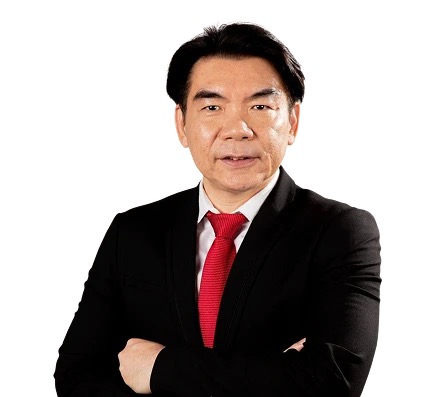
Dr. Apitep Saekow
Ph.D. Computer Engineering, M.Sc. Computer Science, B.Sc. Computer Science and Information Engineering.
Contributes to engineering rigor, interdisciplinary DIT applications, and research-oriented teaching.

Asst. Prof. Dr. Waransanang Boontarig
Digital Innovation, Faculty of Computer Science, Ubon Ratchathani Rajabhat University.
Research areas include human factors, persuasive technology, e-health adoption, factor analysis, and applied digital innovation.
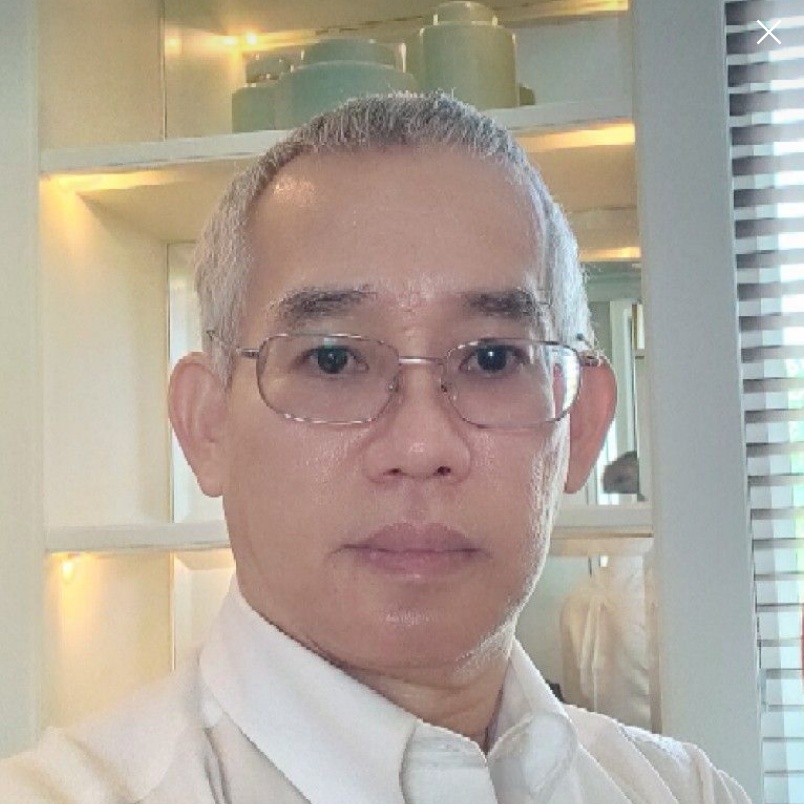
Assoc. Prof. Dr. Kittichai Lavangnananda
Ph.D. Artificial Intelligence, M.Sc. Computer Science, B.Sc. Computer Science.
Research areas include machine learning, deep learning, evolutionary computation, data science, and multi-objective optimization.
Program Milestones
Approval and launch timeline from official program specification documents.
M.Sc. program approved by Academic Committee (Meeting 4/2024).
M.Sc. program approved by University Council (Meeting 4/2024).
Ph.D. program approved by Academic Committee (Meeting 2/2025).
Ph.D. program approved by University Council (Meeting 2/2025).