Stage 01
Mission Briefing
Data 000000
Press scroll to start

Digital Future
Mission

Scroll or use the arrow keys to travel through Stamford's digital campus. Each checkpoint reveals the next part of the M.Sc. and Ph.D. journey.

STAGE 01 / RAMA 9 BASE

Choose Your Digital Mission

Two international graduate programs. One shared objective: build the knowledge, research strength, and leadership to shape the digital future.

M.Sc. Route Ph.D. Route International
Open Mission Map
STAGE 02 / PROGRAM CORE

Power Up Your Expertise

The M.Sc. combines advanced coursework with a thesis or independent study. The Ph.D. develops original research through research-focused or coursework pathways.

M.Sc. 36 Credits Ph.D. 48 Credits
Explore Both Programs
STAGE 03 / ACTIVE SIGNAL

Enter The Community

Seminars, workshops, research discussions, student projects, and program announcements connect learning with a living academic community.

Workshops Research Events Student Life
View Activities
STAGE 04 / MASTER MODE

Master Digital Systems

Advance through AI, data, cybersecurity, blockchain, cloud, software engineering, and digital transformation with a flexible 3-4 subject semester plan.

Plan A: Thesis Plan B: Independent Study
Enter M.Sc. Program
STAGE 05 / DOCTORAL MODE

Create Original Knowledge

Work closely with advisors to investigate advanced DIT challenges, pass the qualifying examination, prepare research for dissemination, and complete a doctoral dissertation.

Plan 1.1: Research Plan 2.1: Coursework
Enter Ph.D. Program
STAGE 06 / ROUTE PLANNER

Build Your Study Route

See the doctoral learning focus for each term, expected credit load, research milestones, and flexible progression through the Ph.D. program.

Term-by-Term Flexible Progression
Open Learning Schedule
STAGE 07 / EXPERT NETWORK

Train With Specialists

Learn with lecturers spanning AI, data science, computer engineering, information systems, digital innovation, and advanced research.

6 Lecturers Research Mentoring Publication Support
Meet The Lecturers
FINAL STAGE / FUTURE UNLOCKED

Your Next Level Starts Here

Continue into the complete program guide for courses, plans, schedules, research opportunities, publications, and career pathways.

Knowledge +100 Innovation +100 Future Ready
Continue To Full Guide

Skip intro / Full guide
Graduate School | Rama 9 Bangkok Campus

Mastering Digital Futures at Stamford International University

Explore the M.Sc. and Ph.D. programs in Digital and Information Technology (International Program), designed for advanced practice, research leadership, and real industry impact.

At-a-Glance Overview

Key details extracted from the official 2024 M.Sc. and 2025 Ph.D. curriculum specifications.

M.Sc. 36Total credits with Plan A (Thesis) and Plan B (Independent Study)
Ph.D. 48Total credits with Study Plan 1.1 and Study Plan 2.1
M.Sc. IntakesTerm 1 (Jul-Oct), Term 2 (Dec-Mar)
Ph.D. IntakesJuly, November, March
InternationalPrograms accept both Thai and international students
M.Sc. PlansPlan A (Thesis) and Plan B (Independent Study)
Ph.D. PathsPlan 1.1 (Research) and Plan 2.1 (Coursework + Dissertation)
Research TrackCoursework + research pathways for practical and academic outcomes

Activities

Live updates, workshops, seminars, and announcements from the official Facebook page.

MSc and PhD in Digital and Information Technology at Stamford

The official Facebook timeline is loaded directly through Meta's Page Plugin.

Loading the official Facebook timeline...

Program Explorer

Both programs are shown below with updated 2025 factsheet information.

Master of Science in Digital and Information Technology

International Program | New Curriculum A.D. 2024 / B.E. 2567 | Curriculum Code: T20242084108463
Degree: M.Sc. (Digital and Information Technology)

Factsheet Highlights

  • Intakes: Term 1 (Jul-Oct), Term 2 (Dec-Mar)
  • Total credits: 36 credits for both Plan A and Plan B
  • Program formats: Thesis route or Independent Study route
  • Key requirement: English proficiency per STIU requirement or placement test

Program Objectives

  • Integrate and create innovation in digital and information technology.
  • Build inquiry, critical thinking, leadership, teamwork, and multitasking ability.
  • Strengthen ethics, honesty, social responsibility, and environmental awareness.
  • Develop logical reasoning, digital literacy, communication, and social literacy.

Plan 1 (Academic)

  • Total at least 36 credits
  • Coursework: 24 credits
  • Thesis: 12 credits (MSDIT721)
  • Admission baseline: bachelor's degree, IT foundation, GPA >= 2.75, committee approval

Plan 2 (Professional)

  • Total at least 36 credits
  • Coursework: 30 credits
  • Independent Study: 6 credits (MSDIT720)
  • Admission baseline: bachelor's degree, IT foundation, GPA >= 2.00, committee approval
Foundation & Compulsory Courses
MSDIT601 Fundamentals of Programming (Non-credit)
MSDIT602 Principles of Digital and Information Technology
MSDIT603 Modern Database Management and Data Science Fundamentals
MSDIT604 Modern Systems Analysis and Design
MSDIT605 Machine Learning and Artificial Intelligence
MSDIT606 Cyber Security and Data Protection
MSDIT607 Blockchain Technology and Decentralized Applications
MSDIT608 Research Methodology in Digital and Information Technology
Elective Highlights
MSDIT610 Fundamental of Generative AI and Its Applications
MSDIT611 Digital Marketing
MSDIT612 Data Visualization and Storytelling
MSDIT613 Software Engineering and Project Management
MSDIT614 Digital Transformation and Innovation
MSDIT615 Internet of Things (IoT) and Smart Systems
MSDIT616 Cloud Computing, Virtualization, and DevOps
MSDIT617 Big Data Analytics and Technologies
MSDIT618 NLP with Large Language Models
MSDIT619 Building Generative AI-Powered Applications
MSDIT620 Digital Twins Technology and Applications
MSDIT621 Special Topics in DIT
Research Components
MSDIT720 Independent Study 6(0-18-0)
MSDIT721 Thesis 12(0-36-0)
Career Opportunities
  • Digital and IT Innovator
  • Software Developer / Systems Architect
  • Academic Lecturer / Researcher in DIT
  • Digital Technology Management Professional
  • Digital Tech Entrepreneur

Doctor of Philosophy in Digital and Information Technology

International Program | New Curriculum A.D. 2025 / B.E. 2568
Degree: Ph.D. (Digital and Information Technology) | Total: 48 credits

Factsheet Highlights

  • Intakes: July, November, March
  • Total credits: 48 credits for Study Plan 1.1 and Study Plan 2.1
  • Program formats: Research-focused or Coursework + Dissertation path
  • Key requirements: Master's degree GPA at least 3.0/4.0, English proficiency, academic interview

Program Philosophy

  • Cultivate integrity-driven researchers for original DIT contributions.
  • Advance rigorous inquiry, innovation, and industry linkage.
  • Address complex international digital challenges with research impact.
  • Develop leaders for academia, industry, and society in a technology-driven world.

Plan 1.1 (Dissertation)

  • Foundation: 2 non-credit courses (PDIT701, PDIT702)
  • Dissertation: 48 credits (PDIT791)
  • For master's graduates with thesis/research capability
  • English proficiency and committee approval required

Plan 2.1 (Coursework + Dissertation)

  • Foundation: 2 non-credit courses
  • Core: 9 credits + Elective: 3 credits
  • Dissertation: 36 credits (PDIT792)
  • Related master's degree, English proficiency, committee approval
Program Learning Outcomes for Doctoral Graduates
Outcome 1 Synthesize advanced Digital and Information Technology theories to identify major research gaps and original questions.
Outcome 2 Generate research and solutions with international and industry relevance.
Outcome 3 Design rigorous independent research with professional integrity.
Outcome 4 Apply advanced interdisciplinary research skills for societal and industry challenges.
Outcome 5 Uphold the highest research ethics and responsible innovation.
Outcome 6 Demonstrate intellectual leadership and communicate to diverse global audiences.
Foundation Courses (Non-credit)
PDIT701 Scholarly Research Communication and Ethics
PDIT702 Theoretical Foundations of Information Systems Research
Core Courses (9 Credits)
PDIT711 Research Methodologies in Digital and Information Technology (3 credits)
PDIT712 Information Security Management (3 credits)
PDIT713 Generative AI in Work, Academia, and Research (3 credits)
Elective Course Pool (Choose 1 Course, 3 Credits)
PDIT731 Blockchain, Smart Contracts, and Distributed Applications (3 credits)
PDIT732 Large Language Models Essential (3 credits)
PDIT733 Advanced Topics in Generative AI Implementation (3 credits)
PDIT734 Special Topics in Digital and Information Technology (3 credits)
PDIT735 Digital Transformation and Innovation (3 credits)
PDIT736 Requirements Engineering for Digital and Information Technology Innovation (3 credits)
PDIT737 Digital Storytelling and Narrative Design for DIT Research Dissemination (3 credits)
PDIT738 Human Computer Interaction Research and Design for DIT Innovation (3 credits)
PDIT739 Seminar in Emerging Trends in Digital and Information Technology (3 credits)
Dissertation Structure and Qualifying Examination
Plan 1.1: PDIT791 Doctoral Dissertation (48 credits), typically distributed across five dissertation registrations (12 + 9 + 9 + 9 + 9 credits).
Plan 2.1: PDIT792 Dissertation (36 credits), typically distributed across four dissertation registrations (9 + 9 + 9 + 9 credits).
Qualifying Examination: Required milestone before full dissertation progression.
Admission Criteria Snapshot
Master's degree in Digital and Information Technology, Computer Science, Information Systems, Software Engineering, Computer Engineering, Data Science, Multimedia Technology, or a related field from an accredited institution.
Plan 1.1 requires a completed master's thesis with demonstrated research capability.
Applicants must meet Stamford International University's English proficiency requirements.
Final selection is subject to Program Committee and Doctoral Programs Central Administration Committee.
Career Opportunities
  • University Professor in DIT
  • Research Scientist in DIT
  • AI Engineer
  • Information Technology Manager
  • Digital Transformation Consultant
  • Chief Technology Officer (CTO)

Ph.D. Planned Learning Schedule

Clear term-by-term progression adapted to the approved 2025 doctoral curriculum structure.

Ph.D. Study Plan 1.1 (By Research)

Total 48 credits | Foundation study, qualifying examination, and dissertation

Study Period Credit Load Learning Focus
Year 1, Term 10Foundation courses and qualifying examination preparation
Year 1, Term 212Dissertation proposal and early dissertation work
Year 1, Mid-Year Session0Research continuation milestone
Year 2, Term 19Doctoral dissertation research and supervision
Year 2, Term 29Doctoral dissertation research and supervision
Year 2, Mid-Year Session0Research continuation milestone
Year 3, Term 19Doctoral dissertation writing and validation
Year 3, Term 29Final dissertation completion and publication preparation
Year 3, Mid-Year Session0Final defense and graduation completion phase

Ph.D. Study Plan 2.1 (By Coursework)

Total 48 credits | Coursework, qualifying examination, and dissertation

Study Period Credit Load Learning Focus
Year 1, Term 13Foundation courses and one doctoral coursework subject
Year 1, Term 29Advanced coursework and qualifying examination
Year 1, Mid-Year Session0Progression review and dissertation direction
Year 2, Term 19Doctoral dissertation research and supervision
Year 2, Term 29Doctoral dissertation research and supervision
Year 2, Mid-Year Session0Research progression milestone
Year 3, Term 19Doctoral dissertation writing and validation
Year 3, Term 29Final dissertation completion and publication preparation
Year 3, Mid-Year Session0Final defense and graduation completion phase

Note: Ph.D. study plans are flexible and may be adjusted based on student readiness, research progress, and advisor recommendation.

Publications

Program-wide publication directions for graduate students and research supervisors.

M.Sc. Publication Path

  • Thesis results must be published, accepted by an academic journal, presented with conference proceedings, or disseminated through another searchable academic publication approved by the Graduate Committee.
  • Independent Study results must be presented at a national or international academic conference with proceedings, or published in another searchable form that meets university requirements.
  • Research Methodology prepares students for journal publication processes, research ethics, citation quality, and responsible dissemination.

Ph.D. Publication Path

  • Study Plan 1.1 requires either two articles published or accepted in high-quality journals, or one high-quality international journal article plus an applicable innovation or creative work, or a patent.
  • Study Plan 2.1 requires either one article published or accepted in a high-quality journal, or a patent, innovation, or creative work with commercial, social, or economic application.
  • Journal quality and innovation assessment follow the relevant committee announcements and external-expert review requirements.

Publication Support

  • Advisor-led manuscript reviews, colloquium feedback, and research discussion groups.
  • Structured preparation for abstract writing, paper presentation, and revision cycles.
  • Cross-program collaboration opportunities between M.Sc. and Ph.D. research topics.

About Lecturers

Lecturers responsible for the DIT curricula in the M.Sc. and Ph.D. programs.

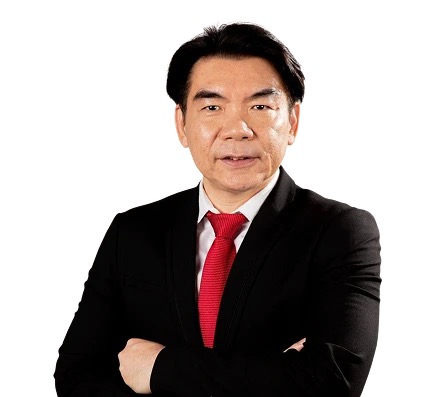
Assoc. Prof. Dr. Charnsak Srisawatsakul

Assoc. Prof. Dr. Charnsak Srisawatsakul

Program Director | Information Technology

Ph.D. Information Technology, M.Sc. Electronic Business, B.Sc. Computer Science.

Leads program development, curriculum design, research supervision, and innovation-focused graduate education.

Asst. Prof. Dr. Waransanang Boontarig

Asst. Prof. Dr. Waransanang Boontarig

Ph.D. Information Technology, M.Sc. Information Technology.

Research areas include human factors, persuasive technology, e-health adoption, factor analysis, and applied digital innovation.

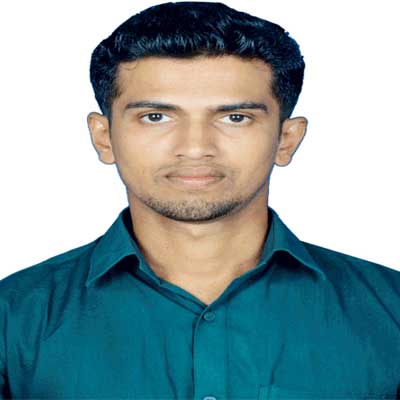
Asst. Prof. Dr. Abdul Jabbar Perumbalath

Asst. Prof. Dr. Abdul Jabbar Perumbalath

Ph.D. Computer Science, M.Phil. Computer Science, M.Sc. Computer Science, B.Sc. Computer Science.

Supports doctoral-level scholarship, ethical research practice, and deep technical foundations.

Dr. Apitep Saekow

Dr. Apitep Saekow

Ph.D. Computer Engineering, M.Sc. Computer Science, B.Sc. Computer Science and Information Engineering.

Contributes to engineering rigor, interdisciplinary DIT applications, and research-oriented teaching.

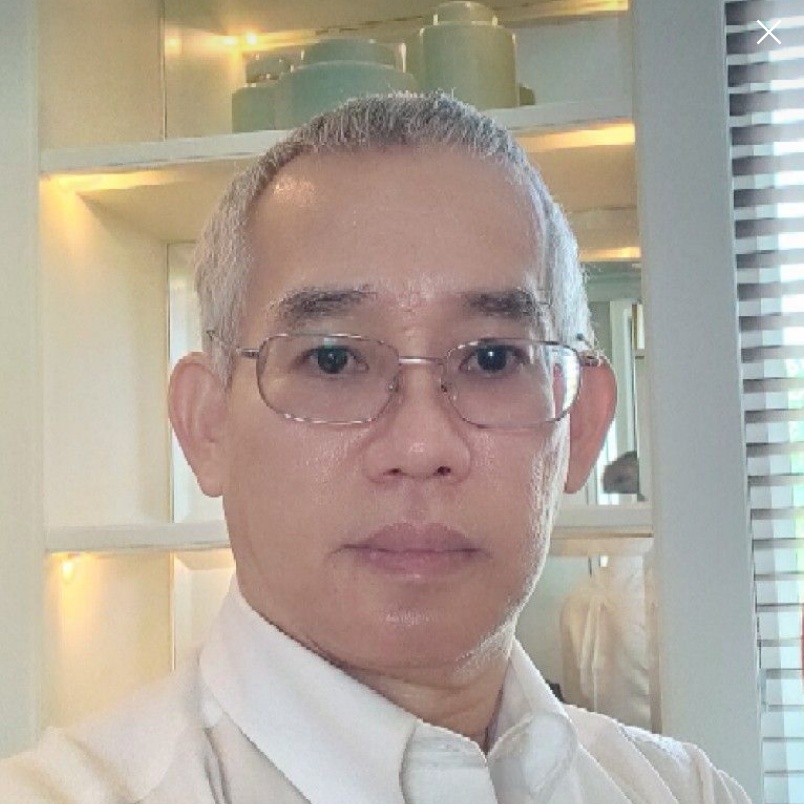
Assoc. Prof. Dr. Kittichai Lavangnananda

Assoc. Prof. Dr. Kittichai Lavangnananda

Ph.D. Artificial Intelligence, M.Sc. Computer Science, B.Sc. Computer Science.

Research areas include machine learning, deep learning, evolutionary computation, data science, and multi-objective optimization.

Dr. Maruf Hasan

Dr. Maruf Hasan

D.Eng. Information Science, M.Sc. Information Systems and Computer Science, B.Sc. Computer Engineering.

Contributes to advanced research methodology, systems, and industry-relevant technology integration.

Publications of Lecturers

Complete Google Scholar profile listings for Dr. Charnsak and Dr. Waransanang, sorted by publication year with the newest work first. Other lecturer cards continue to present selected work. Scholar records are reproduced as listed, including entries with incomplete metadata.

Research File 01 / Complete Google Scholar Profile

Assoc. Prof. Dr. Charnsak Srisawatsakul

Complete Google Scholar profile: generative AI, information systems, data privacy, blockchain, mobile services, and digital adoption

24 profile records Open Google Scholar Profile
Complete publication list: newest first 24 records
  1. Enhancing AI Chatbots for Privacy Compliance: Implementing a Prototype for Retrieving Regulations from EU GDPR, Thailand PDPA, and Australian APPs through Local LLMs and RAG Techniques C Srisawatsakul, W Boontarig, G Quirchmayr, T Wongabut, S Chinwicha Proceedings of the 14th International Conference on Advances in Information Technology (IAIT 2026), ACM 2026
  2. TalkTutorAI: Empowering English language proficiency through ChatGPT-assisted conversational practice–A case study at Ubon Ratchathani Rajabhat University, Thailand K Say, C Srisawatsakul, W Boontarig Journal of Applied Informatics and Technology 7 (1), 12-26 2025
  3. Factors Affecting the Acceptance of Live Streaming Technology for Purchasing Products by Ubon Ratchathani Rajabhat University Students: Case Study of TikTok Application S Kitpermkiad, C Srisawatsakul Journal of Applied Informatics and Technology 7 (1), 122-136 2025
  4. Developing a VR Map for the Faculty of Computer Science, Ubon Ratchathani Rajabhat University: A Design Science Approach C Srisawatsakul, W Boontarig, S Kitpermkiad, T Chotiphan, T Chotiphan Journal of Applied Informatics and Technology 7 (1), 41-56 2025
  5. SOCIAL MEDIA BANKING ADOPTION AMONG TEENAGERS: A CASE STUDY OF NORTHEAST THAILAND W Boontarig, C Srisawatsakul ICIC Express Letters 17 (2), 245-254 2023
  6. A Process Model for Data Protection Impact Assessment in Thailand’s Healthcare Sector C Srisawatsakul, W Boontarig, G Quirchmayr ICIC Express Letters 17 (1), 81-90 2023
  7. TERTIARY STUDENT INTENTION TO USE BLOCKCHAIN-BASED ACADEMIC RECORDS: A CASE STUDY OF UBON RATCHATHANI PROVINCE, THAILAND C Srisawatsakul, W Boontarig วารสาร ปัญญา ภิ วั ฒ น์ 14 (2), 309-325 2022
  8. An assessment of privacy concerns on personal health information: Thailand case study C Srisawatsakul, W Boontarig Current Applied Science and Technology, 774-787 2021
  9. Tourism recommender system using machine learning based on user's public instagram photos C Srisawatsakul, W Boontarig 2020-5th International Conference on Information Technology (InCIT), 276-281 2020
  10. A Framework for Designing and Evaluating Persuasive Technology in Education W Boontarig, C Srisawatsakul International Conference on Computing and Information technology, 93-103 2020
  11. An Empirical Study Towards the Intention to Use QR Code Payment in Champasak Province, Lao People’s Democratic Republic C Srisawatsakul, W Boontarig International Conference on Computing and Information Technology, 1-10 2020
  12. Factors Affecting the Adoption of Learning through Mobile Social Networks for Higher Education in Different Innovation Adopter Categories W Boontarig, C Srisawatsakul Publication details are not listed in this Google Scholar profile. 2019
  13. Generations and level of information on mobile devices usage: An entropy-based study C Srisawatsakul, W Boontarig International Conference on Computing and Information Technology, 267-276 2018
  14. on Mobile Devices Usage: An Entropy-Based Study C Srisawatsakul, W Boontarig Recent Advances in Information and Communication Technology 2018 … 2018
  15. The Online Information System for Supporting Classroom Activities in Unstable Internet Connection : A Case Study of Ban Phokramul Primary School C Sittiphan, C Srisawatsakul The Third National Conference on Industrial Technology and Engineering, 266 2017
  16. The Adoption of Facebook vs Line for Classroom Communication: A Case Study of Faculty of Computer Science, Ubon Ratchathani Rajabhat University C Srisawatsakul, W Boontarig The Thirteenth National Conference On Computing and Information technology, 299 2017
  17. Measuring information on mobile devices usage: An entropy-based approach C Srisawatsakul 2016 International Computer Science and Engineering Conference (ICSEC), 1-6 2016
  18. Effects of age on end users’ usage of mobile social network applications C Srisawatsakul, B Papasratorn The 10th International Conference on e-Business (iNCEB2015), Bangkok, 1-7 2015
  19. A pilot study on the effects of personality traits on the usage of mobile applications: A case study on office workers and tertiary students in the Bangkok area C Srisawatsakul, G Quirchmayr, B Papasratorn Recent Advances in Information and Communication Technology: Proceedings of … 2014
  20. Do Personality Traits Work as Moderator on the Intention to Purchase Mobile Applications Work?-A Pilot Study C Srisawatsakul, G Quirchmayr, B Papasratorn Information and Communication Technology-EurAsia Conference, 56-65 2014
  21. Factors affecting consumer acceptance mobile broadband services with add-on advertising: Thailand case study C Srisawatsakul, B Papasratorn Wireless Personal Communications 69 (3), 1055-1065 2013
  22. Measuring Thai consumers’ acceptance of free-application advertisement in Android and iOS device: A conceptual model C Srisawatsakul Proc. 1st Int. Conf. Mobility for Life: Technol. Telecommun. Problem Based … 2012
  23. BlockchainSys 2020 Organizing and Program Committees K Sakurai, Y Ren, G Wang, B White, S Ali, J Ni, J Han, TVX Phuong, ... Publication details are not listed in this Google Scholar profile. n.d.
  24. Information Technology VS Information System! C Srisawatsakul Publication details are not listed in this Google Scholar profile. n.d.
Research File 02 / Complete Google Scholar Profile

Asst. Prof. Dr. Waransanang Boontarig

Complete Google Scholar profile: technology adoption, digital health, persuasive systems, privacy, social media, and applied innovation

25 profile records Open Google Scholar Profile
Complete publication list: newest first 25 records
  1. Enhancing AI Chatbots for Privacy Compliance: Implementing a Prototype for Retrieving Regulations from EU GDPR, Thailand PDPA, and Australian APPs through Local LLMs and RAG Techniques C Srisawatsakul, W Boontarig, G Quirchmayr, T Wongabut, S Chinwicha Proceedings of the 14th International Conference on Advances in Information Technology (IAIT 2026), ACM 2026
  2. TalkTutorAI: Empowering English language proficiency through ChatGPT-assisted conversational practice–A case study at Ubon Ratchathani Rajabhat University, Thailand K Say, C Srisawatsakul, W Boontarig Journal of Applied Informatics and Technology 7 (1), 12-26 2025
  3. Developing a VR Map for the Faculty of Computer Science, Ubon Ratchathani Rajabhat University: A Design Science Approach C Srisawatsakul, W Boontarig, S Kitpermkiad, T Chotiphan, T Chotiphan Journal of Applied Informatics and Technology 7 (1), 41-56 2025
  4. UBRU INTERNATIONAL JOURNAL T La-ongnual, H Khuanrudee, J Sriwongwanna, V Panjakajornsak, ... University of The Ryukyus, Japan 2025
  5. The Design and Implement of Digital Literacy Tracking System for Undergraduate Students S Makdee, W Boontarig, L Puttasomsri 2023 7th International Conference on Information Technology (InCIT), 503-507 2023
  6. Social media banking adoption among teenagers: A case study of Northeast Thailand W Boontarig, C Srisawatsakul ICIC Express Lett 17 (2), 245-54 2023
  7. A Process Model for Data Protection Impact Assessment in Thailand’s Healthcare Sector C Srisawatsakul, W Boontarig, G Quirchmayr ICIC Express Letters 17, 81-90 2023
  8. A Process Model for Data Protection Impact Assessment in Thailand’s Healthcare Sector S Charnsak, B Waransanang, Q Gerald 革新的コンピューティング・情報・制御に関する速報 17 (01), 81 2023
  9. TERTIARY STUDENT INTENTION TO USE BLOCKCHAIN-BASED ACADEMIC RECORDS: A CASE STUDY OF UBON RATCHATHANI PROVINCE, THAILAND C Srisawatsakul, W Boontarig วารสาร ปัญญา ภิ วั ฒ น์ 14 (2), 309-325 2022
  10. An assessment of privacy concerns on personal health information: Thailand case study C Srisawatsakul, W Boontarig Current Applied Science and Technology, 774-787 2021
  11. Tourism recommender system using machine learning based on user's public instagram photos C Srisawatsakul, W Boontarig 2020-5th International Conference on Information Technology (InCIT), 276-281 2020
  12. A Framework for Designing and Evaluating Persuasive Technology in Education W Boontarig, C Srisawatsakul International Conference on Computing and Information technology, 93-103 2020
  13. An Empirical Study Towards the Intention to Use QR Code Payment in Champasak Province, Lao People’s Democratic Republic C Srisawatsakul, W Boontarig International Conference on Computing and Information Technology, 1-10 2020
  14. Factors Affecting the Adoption of Learning through Mobile Social Networks for Higher Education in Different Innovation Adopter Categories W Boontarig, C Srisawatsakul Technical Education Journal: King Mongkut’s University of Technology North … 2019
  15. Generations and level of information on mobile devices usage: An entropy-based study C Srisawatsakul, W Boontarig International Conference on Computing and Information Technology, 267-276 2018
  16. on Mobile Devices Usage: An Entropy-Based Study C Srisawatsakul, W Boontarig Recent Advances in Information and Communication Technology 2018 … 2018
  17. Effect of personality factors on attitude towards the adoption of health information via online social networking W Boontarig 2016 international computer science and engineering conference (ICSEC), 1-6 2016
  18. The unified model for acceptance and use of health information on online social networks: evidence from Thailand W Boontarig, B Papasratorn, W Chutimaskul International Journal of E-Health and Medical Communications (IJEHMC) 7 (1 … 2016
  19. Effect of personality factors on attitude towards the adoption of health information via online social networking. International Computer Science and Engineering Conference … W Boontarig Publication details are not listed in this Google Scholar profile. 2016
  20. International Journal of E-Health and Medical Communications S Sankaranarayanan, V Udayasuriyan, G Mehta, MK Dutta, PS Kim International Journal 7 (4) 2016
  21. An evaluation model for analysing persuasive systems in mobile healthcare W Boontarig, G Quirchmayr, W Chutimasakul, B Papasratorn 2014 International Conference on Computer, Information and Telecommunication … 2014
  22. A conceptual model of intention to use health information associated with online social network W Boontarig, W Chutimasakul, B Papasratorn 2013 Computing, Communications and IT Applications Conference (ComComAp), 25-29 2013
  23. Factors influencing the Thai elderly intention to use smartphone for e-Health services W Boontarig, W Chutimaskul, V Chongsuphajaisiddhi, B Papasratorn 2012 IEEE symposium on humanities, science and engineering research, 479-483 2012
  24. 2012 IEEE symposium on humanities, science and engineering research. W Boontarig, W Chutimaskul, V Chongsuphajaisiddhi, B Papasratorn 2012 IEEE symposium on humanities, science and engineering research, 479-483 2012
  25. 1RRUNKROLV/XWKILO+ DNLP W Aditya, L Annam, STY Aung, N Aunsri, J Boonchai, P Boonmee, ... Publication details are not listed in this Google Scholar profile. n.d.
Research File 03

Asst. Prof. Dr. Abdul Jabbar Perumbalath

Video analytics, anomaly detection, software models, and computer vision

  1. Movi, M., & Jabbar, A. P. (2024). A Subtle Self-Acting Framework for Revamping Data Stream Management in Unsupervised Video Environments. Signal, Image and Video Processing.
  2. Movi, M., & Jabbar, A. P. (2024). Unveiling Rare Patterns: Anomaly Detection in CCTV Footage for Safeguarding Home Premises. Journal of Information Assurance and Security, 19(1), 15–35.
  3. Thushara, L., & Jabbar, A. P. (2024). Beyond the General Pose: An Optimized Yoga Posture Similarity Assessment Method with PCA-Driven Feature Selection. Proceedings of the 9th International Conference on Computer Vision & Image Processing, 19–21.
Research File 04

Dr. Apitep Saekow

Computer engineering, neural networks, GNSS, positioning, and communications

  1. Budtho, J., Supnithi, P., Siansawasdi, N., Saito, S., Saekow, A., & Myint, L. M. M. (2024). Ground Facility Error Analysis and GBAS Performance Evaluation Around Suvarnabhumi Airport, Thailand. IEEE Transactions on Aerospace and Electronic Systems, 60(1), 537–547.
  2. Thu, P. C., Supnithi, P., Budtho, J., Saekow, A., et al. (2023). Instrumental Receiver Bias Estimation for Ionospheric Total Electron Content by Neural Network Model. ECTI Transactions on Electrical Engineering, Electronics, and Communications, 21(3), 251470.
  3. Thu, P. C., Supnithi, P., Myint, L. M. M., Saito, S., Saekow, A., & Hozumi, K. (2022). Neural Network Prediction of Receiver Bias in Ionospheric Delay Computation. 2022 19th International Conference on Electrical Engineering/Electronics, Computer, Telecommunications and Information Technology.
  4. Thu, P. C., Supnithi, P., Myint, L. M. M., Budtho, J., Saito, S., Saekow, A., & Siansawasdi, N. (2022). Study on Effect of Equatorial Plasma Bubble over Real-Time Kinematic Positioning in Bangkok, Thailand. 2022 37th International Technical Conference on Circuits/Systems, Computers and Communications.
  5. Budtho, J., Supnithi, P., Saito, S., Siansawasdi, N., & Saekow, A. (2021). Multipath Analysis at Low-Latitude GNSS Stations Around Suvarnabhumi Airport, Thailand, for GBAS Standards. 2021 7th International Conference on Space Science and Communication.
Research File 05

Assoc. Prof. Dr. Kittichai Lavangnananda

Artificial intelligence, graph clustering, deep learning systems, and optimization

  1. Punnapathiran, T., Angsuchotmetee, C., Kaewkarndee, P., & Lavangnananda, K. (2025). CGNLib: A Python Library for Girvan-Newman Community Detection with Customizable Node-Based Centrality Metrics. SoftwareX, 31, 102193.
  2. Thanapol, P., Lavangnananda, K., Leprévost, F., Glad, A., Schleich, J., & Bouvry, P. (2024). Round-Based Mechanism and Job Packing with Model-Similarity-Based Policy for Scheduling DL Training in GPU Cluster. Applied Sciences, 14(6), 2349.
  3. Tariq, R., Lavangnananda, K., Bouvry, P., & Mongkolnam, P. (2024). An Edge-Based Approach to Partitioning and Overlapping Graph Clustering with User-Specified Density. Applied Sciences, 14(1), 380.
  4. Tariq, R., Lavangnananda, K., Bouvry, P., & Mongkolnam, P. (2023). Partitioning Graph Clustering with User-Specified Density. IEEE Access, 11, 122273–122294.
  5. Wangsom, P., Lavangnananda, K., & Bouvry, P. (2019). Multi-Objective Scientific-Workflow Scheduling with Data Movement Awareness in Cloud. IEEE Access, 7, 177063–177081.
Research File 06

Dr. Maruf Hasan

Natural language processing, machine learning, crisis analytics, and deep learning

  1. Asif, A., Khatoon, S., Hasan, M. M., et al. (2021). Automatic Analysis of Social Media Images to Identify Disaster Type and Infer Appropriate Emergency Response. Journal of Big Data, 8, 83.
  2. Khatoon, S., Alshamari, M. A., Asif, A., Hasan, M. M., et al. (2021). Development of Social Media Analytics System for Emergency Event Detection and Crisis Management. Computers, Materials & Continua, 68(3), 3079–3100.
  3. Khatoon, S., Hasan, M. M., Asif, A., Alshmari, M., & Yap, Y. (2021). Image-Based Automatic Diagnostic System for Tomato Plants Using Deep Learning. Computers, Materials & Continua, 67(1), 595–612.
  4. Khatoon, S., Abu Romman, L., & Hasan, M. M. (2020). A Domain-Independent Automatic Labeling System for Large-Scale Social Data Annotation Using Lexicon and Web-Based Augmentation. Information Technology and Control, 49(1), 36–54.

Program Milestones

Approval and launch timeline from official program specification documents.

12 Nov 2024

M.Sc. program approved by Academic Committee (Meeting 4/2024).

19 Nov 2024

M.Sc. program approved by University Council (Meeting 4/2024).

10 Jun 2025

Ph.D. program approved by Academic Committee (Meeting 2/2025).

24 Jun 2025

Ph.D. program approved by University Council (Meeting 2/2025).